
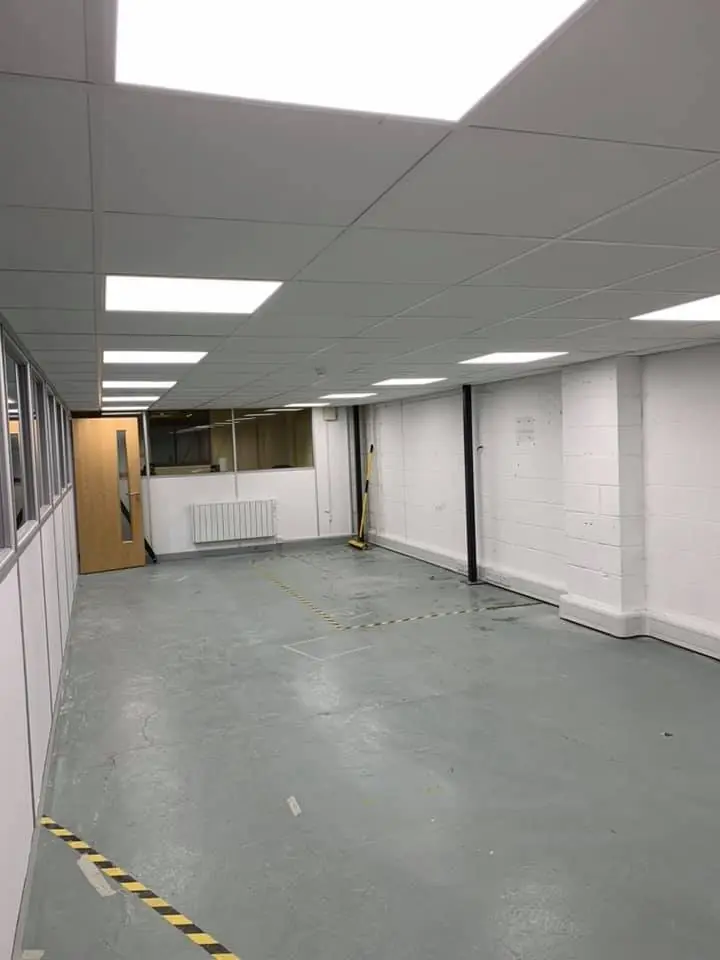
Emergency lighting in Cambridge
Design, installation and testing, so the escape routes in your building stay lit if the power fails, and you have the records to prove it.
Why it matters
Emergency lighting sits in the background, often for years, without being used, so it’s easy to forget. We wouldn’t want any client to find out the hard way that a system installed years ago won’t work when it’s needed most.
Like a fire alarm system, emergency lighting has to be properly tested, maintained and serviced, and that’s a legal requirement. In England the duty sits with the “responsible person” for the building under the Regulatory Reform (Fire Safety) Order 2005, and the testing routine is set out in BS 5266-1.
What we do
- Emergency lighting design for new buildings, extensions and refits
- Installing new emergency lighting and exit signs
- The annual full-duration test, the 12-month statutory test, so you stay compliant with your insurance and legal requirements
- Complete testing and NICEIC certification for emergency lighting installations
- Test results and log books supplied
- Advice on any improvements needed to meet current standards
How often emergency lighting must be tested
Every month
A short functional test, in line with BS EN 50172 and BS 5266-8. A mains failure is simulated just long enough to check that every fitting and sign is present, clean and working. This one can be done by the responsible person or a qualified electrician.
Every year
A test for the full rated duration of the emergency lights, for example three hours. Every light must still be working at the end. The result has to be recorded, and any failures put right as soon as possible. We strongly recommend having a qualified electrician carry out this test.
Daily, for central battery systems only
If your emergency lighting runs from one central back-up battery rather than a battery in each fitting, the indicators on the central supply should be checked visually every day to confirm the system is working. No test of operation is needed.
Testing at a glance
- Monthly short functional test
- Yearly full-duration test, usually 3 hours
- Daily visual check, central battery systems only
- Every test recorded in the log book
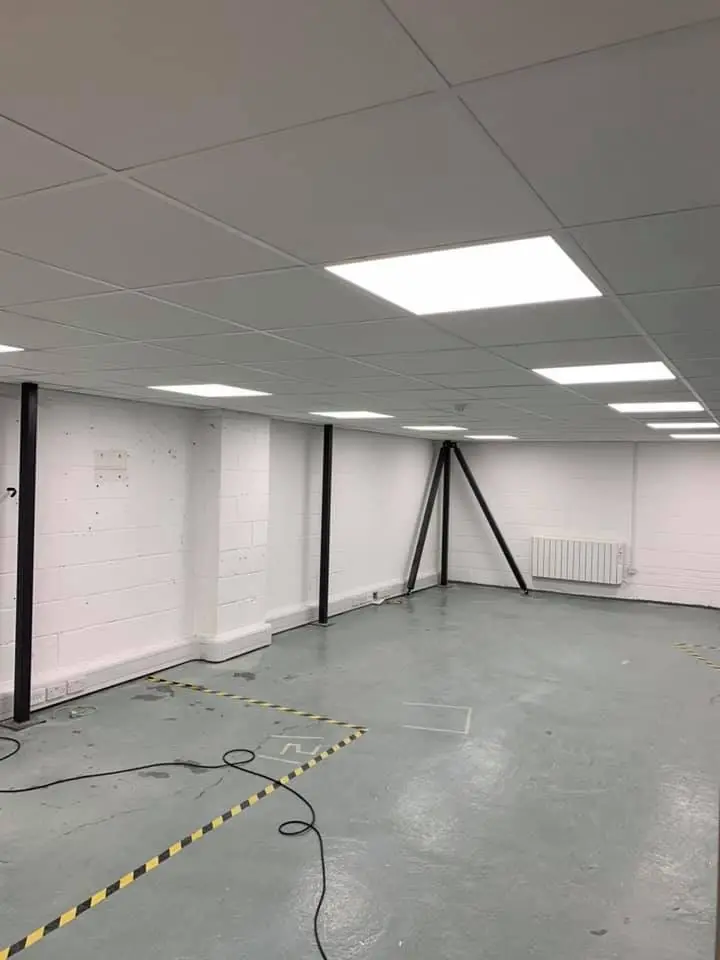
Lancaster Way Business Park, Ely
For a company’s new office in Ely we fitted emergency lighting alongside LED lighting, energy-efficient heaters, and power and data sockets in skirting trunking.
Questions about emergency lighting
Who is the responsible person?
Usually the employer, the owner, or whoever has control of the premises. The Fire Safety Order makes them responsible for making sure the emergency lighting is tested and maintained.
Can I do the monthly test myself?
Yes. The monthly functional test can be carried out by the responsible person, or by a qualified electrician if you’d rather hand it over.
What goes in the log book?
The date of each test, what was tested, the result, and any faults found and how they were put right. Your insurer or a fire safety officer may ask to see it.